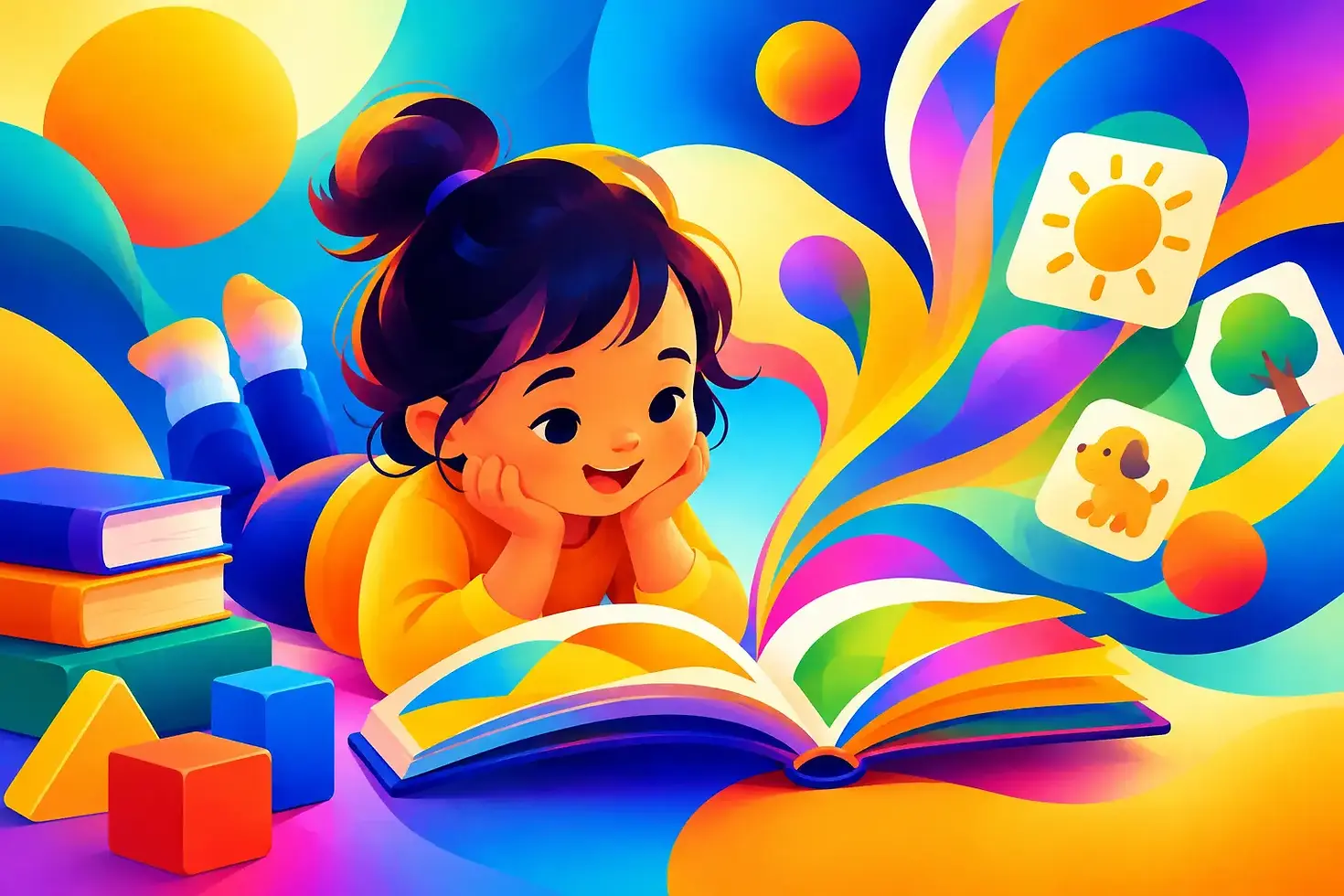
Early Literacy Activities for Preschoolers

A preschooler who points to the first letter in her name, retells a favorite Bible story in her own words, or pretends to write a grocery list is already building the foundation for reading. Early literacy activities for preschoolers do not need to look like formal lessons. The most meaningful learning happens when children feel safe, noticed, and free to explore language with joy.
For young children, literacy is much bigger than memorizing the alphabet. It includes listening, speaking, understanding stories, noticing print, playing with sounds, and discovering that marks on a page can carry meaning. These experiences help prepare children for kindergarten while also strengthening confidence, communication, and a lifelong love of learning.
What Early Literacy Looks Like Before Children Read
Preschoolers learn to read gradually, through many small moments. A child may recognize the logo on a favorite snack, hear that “ball” and “wall” rhyme, or tell a detailed story about a drawing. Each of these moments supports later reading and writing.
Adults can sometimes feel pressure to make preschool learning more academic than it needs to be. Letter worksheets and flashcards may have a place in moderation, especially when a child enjoys them, but they cannot replace conversation, read-aloud time, imaginative play, and hands-on discovery. Children learn best when literacy feels connected to people, play, and a purpose they understand.
A warm classroom or home environment also matters. When a child knows that mistakes are welcome and ideas are heard, he is more likely to try unfamiliar words, ask questions, and share his thinking. Those are powerful learning habits for kindergarten and beyond.
Early Literacy Activities for Preschoolers That Feel Like Play
Make read-alouds interactive
Reading together every day is one of the simplest ways to grow language. Pause occasionally to let your child study the pictures, predict what might happen next, or explain how a character may be feeling. Rather than testing whether they remember every detail, invite real conversation: “What would you do?” or “Why do you think she made that choice?”
Rereading favorite books is valuable, not repetitive. Familiar stories help children recognize patterns, join in with repeated phrases, and build the confidence to retell events in order. A book with a meaningful lesson about kindness, courage, gratitude, or helping a friend can also open gentle conversations about character.
Put names and words into daily routines
Print becomes meaningful when children see it connected to their lives. Label a child’s cubby, artwork, water bottle, or place at the table with their name. Point out the first letter and celebrate when they begin to recognize it independently.
At home, involve your preschooler in simple print-rich routines. Let them help make a shopping list, circle pictures in a grocery ad, choose a recipe card, or “read” the symbols on a calendar. They do not need to form letters perfectly. Scribbles, wavy lines, and letter-like shapes are early writing, and they deserve encouragement.
Play with sounds before focusing on spelling
Children need to hear the sounds in language before they can connect sounds with letters. Sing songs, clap the syllables in family members’ names, and enjoy silly rhymes. You might say, “I’m thinking of an animal that starts with the sound mmm,” and let your child guess monkey, mouse, or moose.
Keep the mood light. If a child is not ready to identify a sound or loses interest, simply move on. The goal is not a correct answer every time. The goal is helping children listen closely and enjoy the music of language.
Invite storytelling through art and dramatic play
A cardboard box can become a bakery, a doctor’s office, a spaceship, or a home for stuffed animals. In dramatic play, children negotiate roles, use new vocabulary, solve small problems, and create stories together. An adult can extend the learning by adding a notepad for orders, appointment cards, menus, signs, or labeled props.
Art offers another natural path to literacy. After a child paints a picture or builds a structure, ask them to tell you about it. Write down their exact words and read them back. Seeing spoken ideas become written words teaches a powerful lesson: what I say matters, and writing preserves my message.
Create a cozy, reachable book space
Children are more likely to choose books when they can see and reach them. Keep a small basket of sturdy picture books in a comfortable, well-lit spot, then rotate selections every few weeks. Include stories featuring different families, interests, cultures, and emotions, along with nonfiction books about animals, weather, construction, or other subjects your child loves.
A quiet book space does not require an elaborate setup. A soft rug, a few pillows, and an attentive adult are enough. The relationship around reading is often what children remember most.
Build Literacy Through Conversation and Listening
Strong readers need strong language. Throughout the day, talk with children about what they see, feel, wonder, and plan. During a walk, notice the sound of leaves underfoot or ask how a squirrel might be preparing for colder weather. At lunch, invite children to describe the color, texture, and taste of their food.
These exchanges grow vocabulary, but they also communicate something deeper: your child’s thoughts are worth hearing. Give them time to answer. Preschoolers may need a few quiet seconds to organize their words, especially when they are learning to express a new idea or feeling.
Listening games can make this skill fun. Ask children to close their eyes and identify sounds in the room, such as a clock, footsteps, rain, or paper rustling. Follow simple directions during a scavenger hunt. Retell a short story using picture cards. These activities support attention, comprehension, and the ability to follow classroom routines.
Keep Learning Developmentally Appropriate
Every child develops at a different pace. Some preschoolers eagerly name letters and attempt to write their names, while others are more focused on movement, conversation, or imaginative play. Neither approach determines a child’s future success.
The most helpful response is to offer repeated, low-pressure opportunities. If your child loves vehicles, read transportation books, make road signs for toy cars, and listen for the beginning sound in “truck.” If they love music, build literacy around songs, rhythm, and rhymes. Following a child’s interests keeps learning personal and joyful.
It also helps to watch for frustration. A child who resists sitting for a long story may thrive with brief books, puppets, or a story told while building with blocks. A child who avoids pencils may prefer forming letters in sand, shaving cream, or play dough. The learning goal can stay the same while the path changes.
A Whole-Child Foundation for Kindergarten Readiness
Literacy grows alongside social-emotional development, fine motor skills, curiosity, and independence. A child who can take turns in a conversation, care for a book, ask for help, and persist through a challenge is developing skills that support success in a kindergarten classroom.
At The Tree of Life Children’s Academy, literacy experiences are woven into purposeful play, creative arts, discovery, and caring relationships. Children are encouraged to speak with confidence, explore ideas, practice kindness, and see themselves as capable learners. That combination of nurturing care and intentional teaching helps children approach new challenges with both skill and courage.
Parents do not need to create a perfect preschool classroom at home. A few books, everyday conversation, playful sounds, and time together are a meaningful start. When children are known, loved, and invited to share their ideas, language has room to grow - and so does their confidence.


Comments