How to Develop Early Literacy Through Daily Play

A child who points to the first letter of her name, retells a favorite story in her own words, or eagerly “reads” a familiar picture book is already building a foundation for future learning. Knowing how to develop early literacy is not about pushing flashcards or expecting preschoolers to read before they are ready. It is about filling a child’s day with meaningful language, joyful books, curious questions, and caring relationships.
Early literacy begins long before formal reading instruction. It grows when children feel safe enough to speak, ask questions, make mistakes, and share what they notice. At home and in a nurturing early learning classroom, those small daily moments can become powerful preparation for kindergarten and beyond.
What Early Literacy Really Means
Early literacy includes more than recognizing the alphabet. Children are developing literacy when they listen to sounds in words, build vocabulary, understand that print carries meaning, learn how a story works, and use language to connect with others.
A toddler may show early literacy by turning book pages, naming familiar objects, or joining in with a repeated phrase. A preschooler may begin to recognize rhyming words, identify letters in her name, tell a story with a beginning and ending, or experiment with writing. Each skill matters because reading is built step by step, not all at once.
Children do not all develop these skills on the same timetable. Some are drawn to letters early; others first become strong storytellers, listeners, or observers. The goal is steady growth and confidence, not comparison. When a child feels known, loved, and encouraged, learning becomes something to enjoy rather than something to fear.
How to Develop Early Literacy at Home
The most effective literacy experiences are often woven into routines families already have. A few intentional minutes of connection can make a lasting difference.
Read together with warmth, not pressure
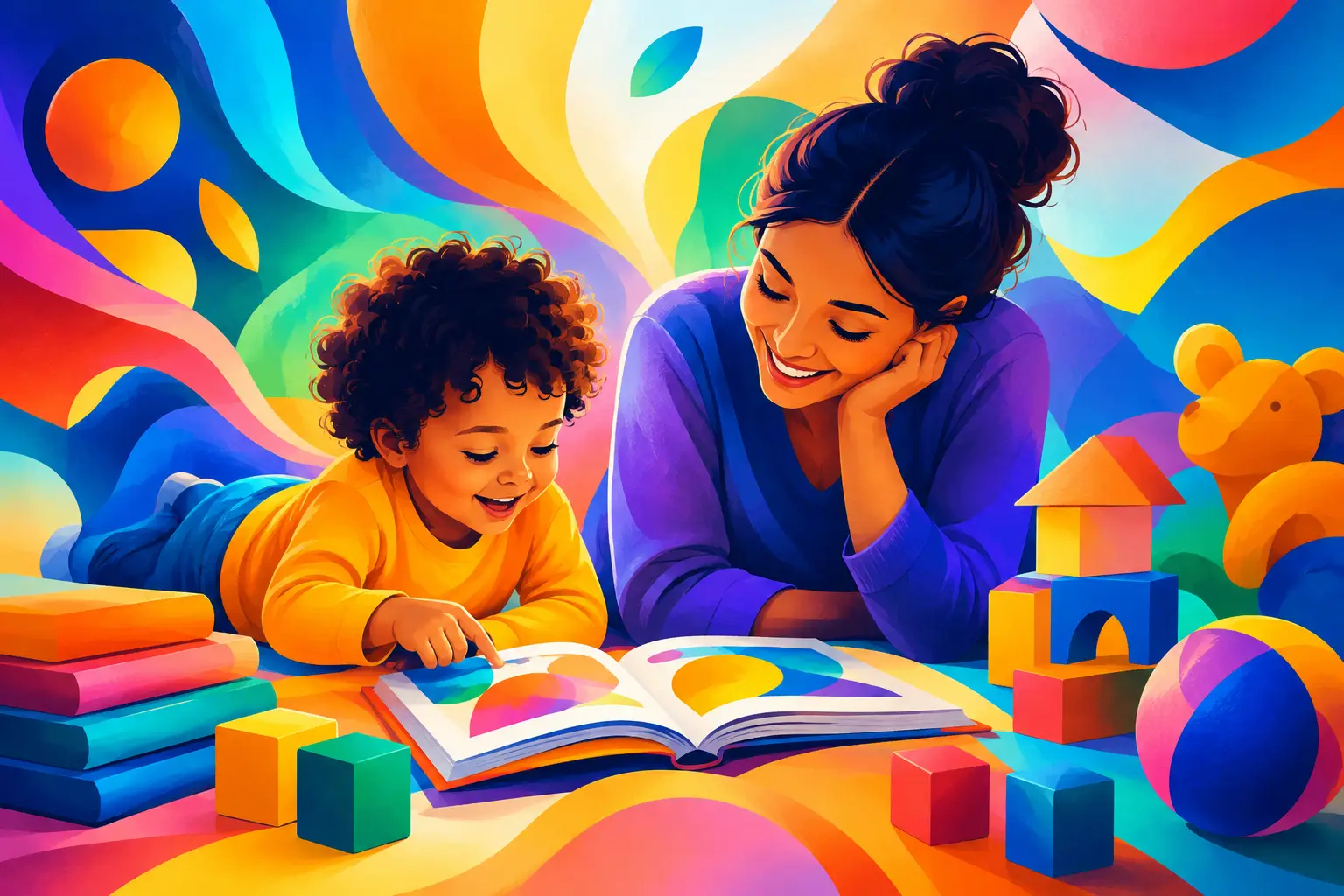
Reading aloud is one of the simplest ways to grow vocabulary, listening skills, imagination, and a love of books. Choose stories your child enjoys, even if that means reading the same book many times. Repetition is not a problem. It helps children notice new details, learn story language, and begin to predict what comes next.
As you read, pause naturally. Ask, “What do you think will happen?” or “How do you think he feels?” Let your child point, respond with a single word, or tell a long story of their own. There is no need to turn every page into a quiz. The conversation matters as much as the book.
For infants and young toddlers, board books with clear pictures, rhythm, and familiar objects are a wonderful place to start. Preschoolers often enjoy stories with a problem to solve, repeated lines, humor, and characters who show kindness or courage.
Make everyday conversations richer
Children learn words through real experiences. Talk with your child while getting dressed, preparing dinner, taking a walk, or driving to school. Instead of only naming what they see, add a little more language: “That truck is enormous. It is carrying gravel for the road.”
Follow your child’s interests. If they are fascinated by bugs, talk about wings, antennae, crawling, and habitats. If they are helping sort laundry, introduce words such as match, pair, smooth, and folded. These conversations build the vocabulary children will later need to understand books and express their own ideas.
Listening is part of literacy, too. Give your child time to answer without rushing in to finish the thought. When children know their voice matters, they become more willing to communicate, ask questions, and try new words.
Play with sounds before focusing on print
Before children can connect letters to sounds, they need opportunities to hear and play with the sounds in language. Sing songs, clap syllables in family members’ names, and enjoy simple rhymes during the day.
You might say, “I’m thinking of a word that rhymes with cat. It is something we wear on our head.” Keep it light and playful. If your child answers “hat,” celebrate the effort. If not, offer the answer and keep going. Sound games should feel like connection, not a test.
This kind of play builds phonological awareness, a big term for an essential skill: hearing that words are made of smaller sound parts. It helps prepare children to understand how spoken language connects to written words.
Invite early writing in meaningful ways
Writing begins with scribbles, lines, shapes, and the desire to leave a mark. Keep crayons, washable markers, paper, sidewalk chalk, and other simple materials within reach. Invite your child to draw a picture for a grandparent, make a pretend restaurant menu, sign a birthday card, or help create a grocery list.
Resist the urge to correct every backward letter or uneven line. Young children need freedom to experiment. You can model writing by saying, “I’m writing your name. Your name starts with M.” Over time, children begin to understand that the marks on a page can communicate a message.
Writing also strengthens hand control, persistence, and independence. Those are valuable kindergarten-readiness skills, even when the page looks more like a joyful scribble than a sentence.
Let Play Lead the Learning
Purposeful play gives children a reason to use language. In a pretend grocery store, children make lists, read labels, negotiate roles, and explain what they are doing. While building with blocks, they describe shapes, create a plan, solve a problem, and tell stories about what they have made.
Creative arts offer similar opportunities. Ask a child to describe a painting, dictate a story about a collage, or explain how they made a sculpture stand up. These experiences strengthen communication and critical thinking while honoring each child’s unique ideas.
Hands-on discovery matters because children learn best when words are connected to something real. A seed planted in a cup can lead to new vocabulary, observations in a journal, questions about growth, and a story about caring for living things. Literacy does not have to be separate from STEM, art, faith, or everyday life. It can grow through all of them.
Create a Print-Rich, Peaceful Environment
Children benefit from seeing print used with purpose. Label a few familiar places or bins at home, keep books where your child can reach them, and let them see you reading recipes, notes, calendars, and messages. Point out letters in meaningful places, especially letters in their name, but avoid turning every errand into a lesson.
A calm reading space can help make books part of family life. It does not need to be elaborate. A soft spot, a small basket of books, and regular time together are enough. Visiting the library, exchanging books with friends, and choosing books about your child’s interests can also keep reading fresh.
Screens can be part of family life, but they are not a substitute for conversation and shared reading. When media is used, choosing high-quality content and talking about it together is more valuable than passive watching. Young children learn language most deeply through responsive relationships with caring adults.
What to Avoid When Supporting Literacy
A strong start does not require worksheets, long lessons, or pressure to perform. In fact, too much correction can make children hesitant to speak, write, or try. If a child loses interest, take a break and return to books or word play later.
It also helps to avoid measuring progress only by letter recognition. A child with a growing vocabulary, strong listening skills, and a vivid imagination is building meaningful literacy, even if they cannot yet name every letter. Those abilities support reading comprehension later on.
If you have concerns about speech, hearing, language development, or your child’s response to books and print, speak with your child’s pediatrician or early childhood educator. Early support can be encouraging and practical, especially when families and teachers work together.
A Loving Community Builds Confident Readers
Children flourish when literacy is part of a relationship-centered day. At Tree of Life Children’s Academy, books, conversations, creative exploration, purposeful play, and character formation work together to help children grow in confidence. Teachers can notice what captures a child’s attention, celebrate progress, and create learning experiences that meet that child where they are.
For families in Humble and the greater Houston area, a free trial day can offer a firsthand look at how a warm, faith-based learning environment supports early literacy alongside social-emotional growth, independence, and kindergarten readiness. The best setting is one where your child is not simply cared for, but truly known.
Tonight, choose one book, one quiet moment, and one question to share with your child. A simple “What was your favorite part?” can become the beginning of a lifelong relationship with language, learning, and the joy of being heard.


Comments